
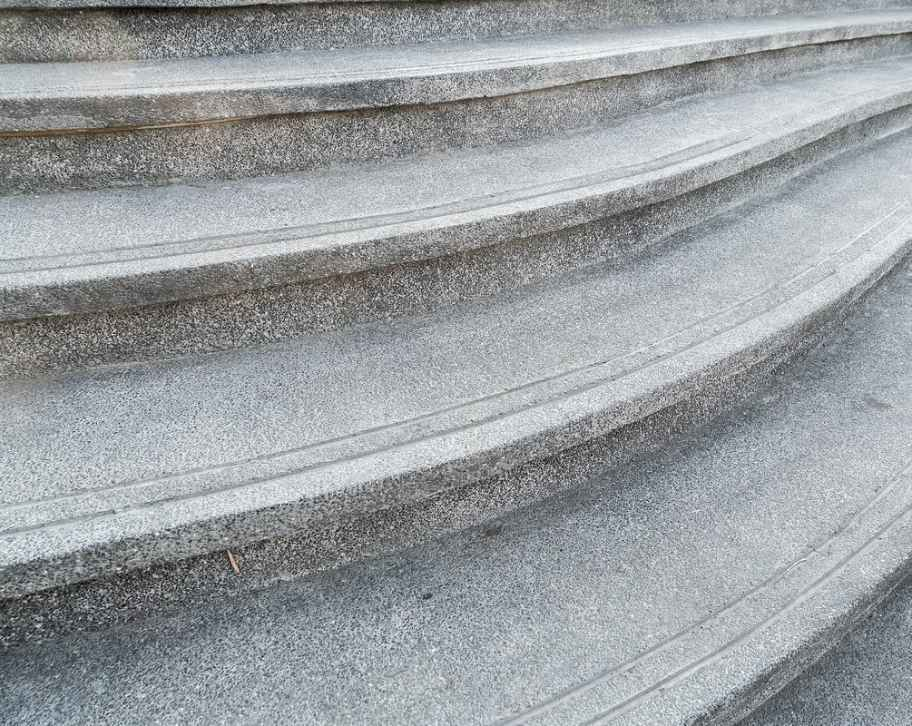
A small crack in an outdoor step may not look particularly serious. Homeowners often assume that a little mortar, concrete patching compound or sealant will solve the problem.
Sometimes it will.
But cracked steps can also be the visible symptom of something happening underneath the surface.
Settlement, water infiltration, deteriorated mortar, soil erosion, frost movement and inadequate base preparation can all cause exterior stairs and stoops to crack, shift or separate.
When the underlying structure is moving, repeatedly patching the visible crack may only hide the problem temporarily.
Knowing the difference between cosmetic deterioration and structural movement can help homeowners decide when a simple repair is reasonable and when the steps need a more thorough evaluation.
Why Exterior Steps Develop Cracks
Outdoor steps are exposed to demanding conditions throughout the year.
Unlike interior stairs, they must withstand:
- Rain
- Snow
- Ice
- Freeze-thaw cycles
- Foot traffic
- Deicing salts
- Ground movement
- Drainage runoff
- Temperature changes
Brick, stone and concrete can all perform well outdoors, but the supporting structure beneath them is equally important.
A durable set of steps depends on several components working together:
Surface materials + mortar + base + support + drainage
If one of these begins failing, cracks may appear somewhere else.
Not Every Crack Means the Steps Need Rebuilding
It is important not to assume the worst every time a small crack appears.
Some cracks are relatively minor.
For example, a small isolated mortar joint may deteriorate while the surrounding bricks remain secure and properly aligned.
A hairline surface crack in otherwise stable concrete may also remain unchanged for years.
Localized repair may be appropriate when:
- The crack is small.
- It has not noticeably grown.
- The step remains level.
- Surrounding materials are secure.
- There is no significant settlement.
- Water is not entering underneath.
- The base appears stable.
The important question is whether the crack represents simple material deterioration or continuing movement.
Warning Sign #1: The Crack Keeps Getting Wider
A crack that changes over time deserves more attention than one that remains stable.
Homeowners may notice that a crack:
- Becomes wider
- Extends farther
- Reopens after repair
- Develops in nearby areas
- Begins separating masonry units
This can indicate that movement is continuing.
Filling the crack may temporarily improve the appearance, but if the underlying structure continues moving, the repair may fail again.
Taking photographs periodically can help determine whether a crack is changing.
Warning Sign #2: Several Steps Are Cracking at the Same Time
One damaged tread might be a localized problem.
Cracks affecting several steps can suggest a larger issue.
For example, if multiple risers and treads develop cracks along the same side, part of the supporting structure may be settling.
Likewise, cracking throughout an entire stoop could indicate problems with:
- The foundation beneath it
- Compacted fill
- Drainage
- Internal masonry
- Soil movement
When damage follows a pattern, the entire entrance should be evaluated rather than treating each crack independently.
Warning Sign #3: The Steps Are Separating From the House
A gap developing between a stoop and the building is an important warning sign.
Steps may sometimes be constructed independently from the main house foundation.
If the soil or base beneath the steps settles, the structure may move away from the building.
Homeowners may notice:
- A widening vertical gap
- Cracked caulking
- Broken mortar
- Separation around the landing
- Water entering the gap
The problem becomes particularly important when water can flow into the opening.
Moisture entering behind the stoop may accelerate deterioration or contribute to basement and foundation problems.
Warning Sign #4: The Landing Is Sinking
The landing at the top of exterior steps should provide a stable transition into the home.
When it settles, several problems can develop.
These include:
- Water pooling near the door
- Uneven step heights
- Cracks around the edges
- Gaps beside the building
- Loose pavers or masonry
- Trip hazards
A sinking landing is rarely corrected permanently by filling the visible cracks alone.
The support beneath the landing usually needs to be considered.
Warning Sign #5: Individual Bricks or Stones Are Loose
Loose masonry deserves attention even when cracking appears relatively minor.
A loose brick or stone can indicate that surrounding mortar has deteriorated or that the material beneath it is moving.
This is particularly important on walking surfaces.
A loose tread creates a potential safety concern because it can shift when someone steps on it.
Localized resetting may be appropriate when only one or two units are affected.
When many bricks or stones are loose, however, broader deterioration may be present.
Homeowners dealing with unstable entrances can learn more about professional stairs, steps and stoop repair services that evaluate the treads, risers, landing, sidewalls, base and drainage together.
Warning Sign #6: Mortar Is Falling Out Throughout the Steps
Mortar deterioration is common on brick and stone steps.
These joints experience:
- Rain
- Snow
- Ice
- Salt
- Foot traffic
- Repeated temperature changes
As mortar deteriorates, homeowners may notice:
- Crumbling joints
- Deeply recessed mortar
- Missing sections
- Loose bricks
- Water entering gaps
If the structure remains stable, repointing may restore the joints without requiring complete reconstruction.
However, repointing cannot fix a base that is actively settling.
This distinction matters.
When the supporting structure is stable but joints have weathered, professional repointing and tuckpointing may help preserve the existing brick or stone.
When the entire stoop is moving, the underlying structural problem should be addressed first.
Warning Sign #7: The Sidewalls Are Leaning
Many masonry stoops include sidewalls supporting or enclosing the steps.
These walls should remain reasonably straight.
A leaning or bulging sidewall can indicate:
- Internal pressure
- Settlement
- Failed masonry
- Water infiltration
- Poor drainage
- Base movement
Simply repointing a visibly leaning wall will not make it straight again.
The cause of the movement needs to be determined.
Depending on the severity, the affected section may require rebuilding.
Warning Sign #8: Step Heights Have Become Uneven
Exterior stairs should provide consistent tread and riser dimensions.
If one step settles while another remains stable, the height difference between them changes.
This can create an uncomfortable or potentially hazardous walking surface.
Homeowners may notice that they suddenly catch a foot on a step they have used for years.
Uneven heights can indicate:
- Settlement
- Loose treads
- Base failure
- Shifted masonry
Repair may involve resetting individual materials or rebuilding part of the supporting structure.
Warning Sign #9: Water Pools on the Steps
Outdoor steps should generally shed water rather than hold it.
Water repeatedly pooling on a tread or landing can indicate that the surface has settled or was incorrectly pitched.
Standing water creates several problems.
It can:
- Enter open mortar joints.
- Increase freeze-thaw deterioration.
- Create slippery surfaces.
- Accelerate concrete scaling.
- Reach the foundation or entrance.
- Freeze into ice during winter.
Correcting the slope or settlement may therefore be just as important as repairing visible cracks.
Warning Sign #10: Previous Repairs Keep Failing
One of the strongest indicators of an underlying problem is repeated repair failure.
Imagine a crack that is patched every year.
The patch holds for several months.
Winter arrives.
The crack reappears.
Another layer of repair material is added.
The cycle repeats.
At some point, it makes sense to ask why the crack keeps returning.
Possible causes include:
- Settlement
- Water infiltration
- Weak support
- Frost movement
- Structural separation
- Incompatible repair materials
Repeated patching can become more expensive over time without actually solving the problem.
What Causes Step Settlement?
Settlement occurs when the support beneath the stairs moves downward.
Possible causes include:
Poorly Compacted Fill
If soil or aggregate beneath the steps was not properly compacted during construction, it may gradually compress.
Soil Erosion
Water flowing underneath or beside the stoop can remove fine soil particles.
This can create voids beneath the structure.
Drainage Problems
Persistent saturation may weaken supporting soil or contribute to frost movement.
Inadequate Footings
The supporting base may simply be insufficient for the size and weight of the structure.
Understanding which condition is responsible is important because rebuilding over the same unstable base can eventually create the same problem again.
How Freeze-Thaw Cycles Damage Steps
Freeze-thaw conditions are particularly important for exterior masonry in the Northeast.
Water enters:
- Cracks
- Mortar joints
- Concrete pores
- Gaps around treads
- Spaces beneath masonry
When that moisture freezes, it expands.
Repeated freezing and thawing may gradually enlarge cracks and loosen materials.
This can lead to:
- Spalling bricks
- Cracked concrete
- Loose stone
- Failed mortar
- Surface scaling
Reducing unnecessary water penetration can help limit this type of deterioration.
Deicing Salt Can Also Affect Masonry
Homeowners naturally want exterior stairs to remain safe during winter.
However, repeated use of certain deicing products can contribute to surface deterioration in some masonry and concrete materials.
Salt-contaminated water can enter pores and joints.
Combined with repeated freezing and thawing, the damage may become more severe.
Homeowners should consider the recommendations appropriate for their specific masonry material rather than assuming every deicing product is suitable for every surface.
When Is Repointing Enough?
Repointing can be an excellent solution when:
- Mortar has deteriorated.
- Brick or stone remains secure.
- The structure has not substantially settled.
- Sidewalls remain properly aligned.
- Cracking is primarily within joints.
The deteriorated mortar is removed and replaced with compatible material.
This restores the joints while preserving the existing masonry.
However, repointing is not a substitute for structural repair.
If the steps are sinking, leaning or separating, new mortar will not correct the underlying movement.
When Can Individual Treads Be Repaired?
Localized repairs can also work well when individual step components are damaged.
For example:
- One cracked bluestone tread
- One loose brick
- A damaged concrete edge
- Several deteriorated mortar joints
may not require rebuilding an entire stoop.
The damaged material can sometimes be removed and replaced while surrounding construction remains intact.
The supporting area beneath the material should still be checked to determine why the damage occurred.
When Partial Rebuilding May Be the Better Option
Sometimes only one portion of a stoop has failed.
Partial rebuilding may be practical when:
- Lower steps have settled but the landing remains stable.
- One sidewall has deteriorated.
- Several treads need replacement.
- Localized base failure has occurred.
- Part of the masonry is severely damaged.
This approach preserves sound portions while reconstructing areas that are no longer reliable.
When Complete Stoop Rebuilding May Be Necessary
More extensive reconstruction may be appropriate when:
- Multiple steps are unstable.
- The landing has significantly settled.
- Both sidewalls are moving.
- Large gaps have developed.
- The base has failed.
- Masonry is extensively deteriorated.
- Previous repairs repeatedly fail.
- Water damage exists throughout the structure.
In this situation, removing damaged materials can provide access to the support underneath.
The new base can then be properly prepared before the entrance is reconstructed.
Why Drainage Should Be Checked Before Repair
Water is responsible for many recurring masonry problems.
Homeowners should look at how rain travels around the entrance.
Ask:
- Does the landing slope toward the house?
- Does a gutter overflow onto the steps?
- Does a downspout discharge nearby?
- Does water pool beside the stoop?
- Is soil washing away from the base?
- Does water enter gaps between the stoop and house?
Correcting these problems can help protect repaired or rebuilt steps.
Don’t Ignore the Connection to Walkways
The walkway approaching the stairs may also affect them.
A walkway that has settled can create a poor transition to the first step.
Likewise, water traveling across a walkway may collect near the stoop.
When repairing an entrance, contractors should consider:
- Walkway height
- Slope
- Drainage
- Step transition
- Nearby settlement
Treating connected hardscape areas as one system often produces a better result.
Why Surface Patching Can Be Misleading
Cosmetic patching is attractive because it is quick.
A crack is filled.
The surface looks improved.
But appearance does not reveal what is happening underneath.
If the structure is still moving, the patch may simply crack again.
This is why the most useful question is not:
“How do we fill this crack?”
It is:
“Why did this crack develop?”
Answering the second question leads to better repair decisions.
Inspect Exterior Steps Regularly
Homeowners do not need to perform complicated structural evaluations themselves.
Simple visual inspections can identify developing problems.
Look for:
- New cracks
- Loose masonry
- Missing mortar
- Uneven treads
- Sinking landings
- Leaning sidewalls
- Water pooling
- Gaps beside the house
- Repeated patch failure
Checking these conditions after winter is particularly useful because freeze-thaw cycles can expose weaknesses.
When Professional Evaluation Makes Sense
A professional assessment may be appropriate when:
- Several steps are moving.
- Cracks continue growing.
- Treads feel loose.
- Sidewalls are leaning.
- The landing has settled.
- Large gaps appear beside the house.
- Water repeatedly enters beneath the stoop.
- Previous repairs have failed.
- The entrance appears unsafe.
The goal should be to determine whether the problem involves surface deterioration, mortar failure, drainage, settlement or the supporting base.
For homeowners in New York and New Jersey, Optane Masonry and Home Improvements provides brick, stone and concrete step repair, stoop rebuilding and related masonry services.
Final Thoughts
Cracked steps do not always mean an entire entrance needs to be rebuilt.
Small, stable defects may often be repaired successfully.
Deteriorated mortar may be repointed.
Individual bricks or stones may be reset.
Damaged treads may be replaced.
However, cracks accompanied by settlement, leaning sidewalls, loose masonry, sinking landings or repeated repair failure can point to problems below the visible surface.
In those situations, adding another cosmetic patch may only postpone the necessary repair.
The best approach is to determine why the steps cracked in the first place.
By addressing the cause as well as the visible damage, homeowners can create a safer, more durable entrance and reduce the likelihood of repeatedly repairing the same problem.
