
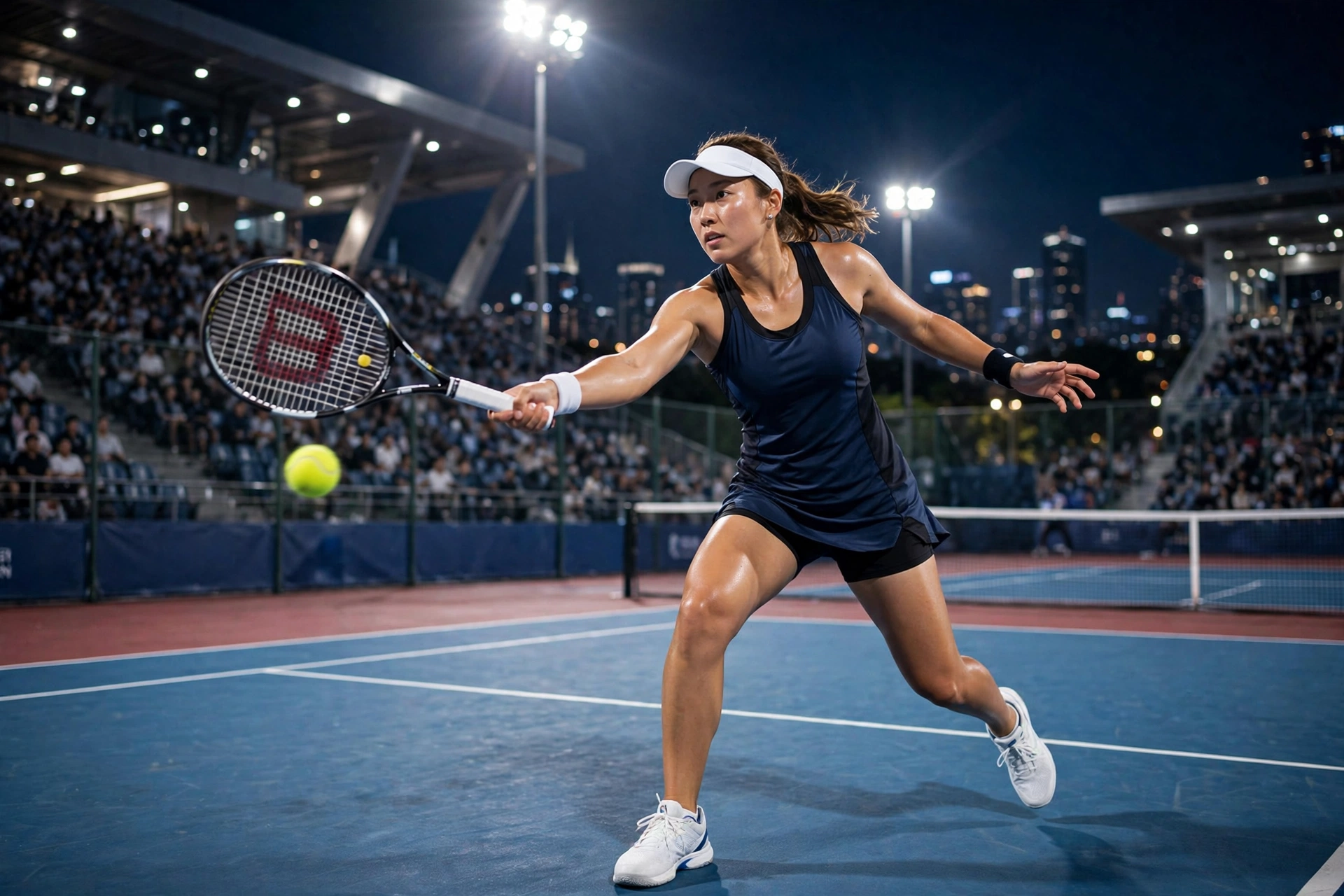
Maria Sakkari has arrived at the Dongfeng Voyah Wuhan Open knowing that the final weeks of the season can still change the story of her year. The Greek star, once ranked as high as No. 3 in the world, is competing at the WTA 1000 event in Wuhan this week, where a deep run would bring ranking points, confidence and a much-needed sense of momentum after a season of stops, starts and stubborn near-misses.
Wuhan is one of the most demanding stops on the autumn Asian swing. The field is stacked with top-10 talent, the hard courts play quick, and there is little time to play your way into form. For Sakkari, whose game is built on athleticism, a heavy forehand and relentless court coverage, those conditions can be both an opportunity and a test — exactly the kind of week that reveals where a player really is.
A Tricky Draw and the Pohankova Test
Sakkari’s campaign has drawn attention in part because of the calibre of opponent standing across the net. Her meeting with rising talent Mirra Pohankova has been widely previewed by tennis analysts, including in Bleacher Nation’s match preview, which underlined how little margin for error exists in early-round WTA 1000 matches at this stage of the season.
On paper, Sakkari’s experience should count for plenty. She has won WTA titles, reached Grand Slam semi-finals at Roland Garros and the US Open, and spent years going toe-to-toe with the very best in the sport. But women’s tennis in 2026 is brutally deep, and younger opponents arrive fearless, swinging freely with nothing to lose. Managing that pressure — holding serve in the tight moments, resisting the urge to overhit, and trusting her movement — will decide how far this Wuhan campaign goes.
A Season Searching for a Signature Result
To understand what Wuhan means to Sakkari, you have to look at the season behind her. It has been a year defined less by collapse than by frustration: competitive matches against elite opponents, weeks where the game looked close to clicking, and then a deciding set or a single loose service game that sent her home earlier than her tennis deserved. Injuries and interruptions in recent seasons disrupted the rhythm of a player who, at her best, is one of the fittest and most physically imposing competitors on tour.
That context matters because Sakkari’s ranking no longer protects her. Without a seeded cushion at the biggest events, she faces dangerous opponents from the very first round, which makes every WTA 1000 week a double task: win matches, and rebuild the ranking that makes future draws kinder. A strong Wuhan run would ease that pressure heading into the off-season and give her team concrete evidence that the work on serve consistency and return positioning is paying off.
Fans following the tour from home can keep up with draws, results and player news through the WTA Tour’s official site, while our own coverage of how audiences follow sport and entertainment on the move, including improving mobile performance, shows just how central second-screen viewing has become during night sessions in Asia.
What Sakkari Does Best When She Is Winning
When Sakkari is playing well, the pattern is unmistakable. Her first serve gains bite, her forehand — hit with heavy topspin and real intent — pushes opponents behind the baseline, and her defence turns desperate retrievals into counter-attacking winners. Few players cover the corners of a hard court as athletically, and Wuhan’s surface should reward her willingness to extend rallies and change direction down the line.
The mental side, though, is just as important. Sakkari has been candid throughout her career about the pressure that comes with carrying Greek tennis hopes almost single-handedly at the top of the women’s game. Managing expectations, both external and her own, has been a recurring theme. The most encouraging sign for her supporters is that she keeps showing up for these fights: entering the biggest events, taking on in-form opponents, and treating a difficult ranking period as a problem to solve rather than a verdict.
What a Deep Run in Wuhan Would Mean
The maths of the autumn swing are simple. Points earned in Wuhan carry weight for the year-end rankings, for Australian Open seeding conversations in January, and for a player’s own belief. For Sakkari, even a quarter-final run here would rank among her most significant results of the season and would send her into the final events of the year with genuine momentum rather than questions.
Win or lose this week, her Wuhan Open campaign is a useful measure of a career at an intriguing crossroads. She is too talented, too fit and too experienced to be written off, yet the tour around her is getting younger and faster every season. The response, as ever with Sakkari, will come through work rate and resilience. Readers can follow more sports and entertainment stories on Rock Band News as the Wuhan Open reaches its decisive rounds and the WTA season moves towards its finale.
